
Kalkaska County Multi-Day Arrest Sources
Start with the Sheriff Office News archive. It is the county's official dated feed. The entries are selected news and accomplishments. No person-by-person intake list appears there. The annual report is even broader, summarizing a full year of agency work rather than any single weekend's bookings. Kalkaska County publishes no 72-hour or seven-day booking window. There is no stated archive depth, no deletion rule, no weekend cadence, and no photo policy for a blotter. So a multi-day arrest picture rests on clearly labeled sources. Several news stories stitched together still never amount to complete jail coverage.
Read the Kalkaska Arrest Trail
Work from a broad date range toward the originating record. Keep both dates straight. The publication date and the event date can differ. Note which agency supplied the facts, since a sheriff release, an MSP call for tips, and a regional article are different kinds of records.
- Search the official sheriff news archive by the date range and topic.
- Check Michigan State Police releases when an item names MSP as the investigating or arresting agency.
- Review regional reporting for leads, then open the individual story and note its source agency.
- For a complete booking question, call the Kalkaska County Jail or request the specific booking and release records from Sheriff Records.
- Use the court record for the later disposition, not a headline or booking charge.
A same-day question follows a tighter path. The 24 Hour Arrests page explains why VINE and the jail phone matter more than news when a booking is fresh.
Kalkaska Arrest Entry Field Check
No standard county web entry exists. Treat this as a field check instead. Whatever a release, story, or booking record leaves blank stays blank until an official source fills it.
| Field | How to read it |
|---|---|
| Person's name | Confirm spelling and another identifier before matching records. |
| Event, arrest, and publish dates | Keep all three separate; a later story is not a later arrest. |
| Source and arresting agency | Identify Sheriff, Village Police, MSP, court, or news outlet precisely. |
| Alleged location | Do not treat a community name as the jail location. |
| Charges as booked | These are charges that can change during prosecution. |
| Custody and facility | Verify local holding, release, or a Wexford transfer separately. |
| Image type | Label a scene, evidence, surveillance, file, or booking image by its source. |
| Case and disposition | Use the court file for the final outcome. |
The official sheriff archive is the example here. Its dated format shows why these posts work as agency news rather than a jail roster.
Dated posts reveal what the sheriff chose to release, while routine Kalkaska County bookings stay outside the archive.
Kalkaska Weekend Reporting Gaps
Kalkaska County posts no weekend blotter schedule. So do not assume one. No holiday cadence is promised either, which means skipping any claim of a Monday upload or overnight refresh. Intake continues regardless, while news staff, agency public-information work, and court filings run on separate clocks. A person can also be released or transferred with no article ever written. The 2024 annual report adds useful background. Monday was the busiest law-enforcement day, it says, with Sunday second and a daytime span the peak. Those are workload facts. They cannot predict when a name appears online. They describe a year of agency activity, not a surge in any weekly feed. When your dates cross a weekend, widen the range and compare the event date with the publication date. Then ask Records for the booking or control-center log, or the inmate jacket, tied to the arrest date. The home page lays out county-wide record paths.
Kalkaska Jail Log Retention
The web can stay silent. Michigan's rules give jail records a firmer framework. General Schedule 11, approved in 2025, governs retention across Kalkaska County agencies. Item 11.200 keeps jail booking and control-center logs through the calendar year plus seven years. Item 11.210 keeps inmate jackets, which may hold intake records, booking cards, mug shots, bonds, warrants, transfer papers, court documents, and release forms, for ten years after release. Those periods govern retention and destruction only. An old item is not promised online. It may not be open without redaction. Not every file holds every piece either. Skip the request for everything and be targeted instead. Give a name, an arrest date range, the agency, and any incident or case number, then name the booking log, inmate jacket, release record, or transfer record you want. The state retention schedule page explains the authority behind these schedules. If the sheriff no longer holds a record, ask what happened to it. Was it destroyed under schedule, preserved for a case, or transferred? The Archives of Michigan offers county guides and research help. Nothing places Kalkaska's jail photo files there.
Note: Retention sets a lawful holding period for a record series; it does not create a public online arrest archive.
Kalkaska Arrest News Is Selective
For regional coverage, start with the 9&10 News Kalkaska County topic page. It is the strongest dated trail. Arrests, manhunts, MSP investigations, and federal cases all share the feed. So does other county news. Its rhythm follows stories, not jail intake. Images vary too. A picture may show a scene, evidence, surveillance, an agency image, or a file image. Never assume a face beside a story is a booking photograph.
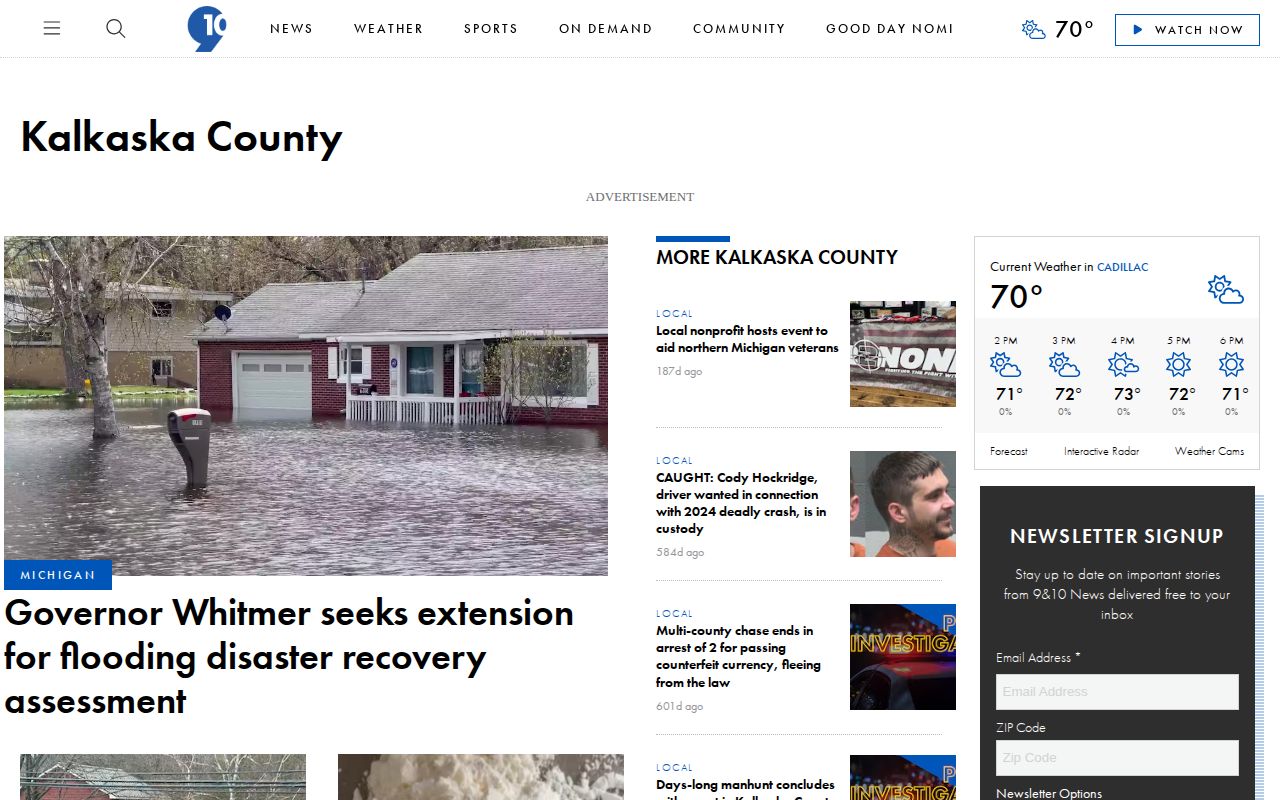
The topic feed helps with dated discovery. Every item still needs agency and court verification. One MSP-sourced break-in report shows the difference: the story ran security imagery while asking the public for help, not a county booking portrait.
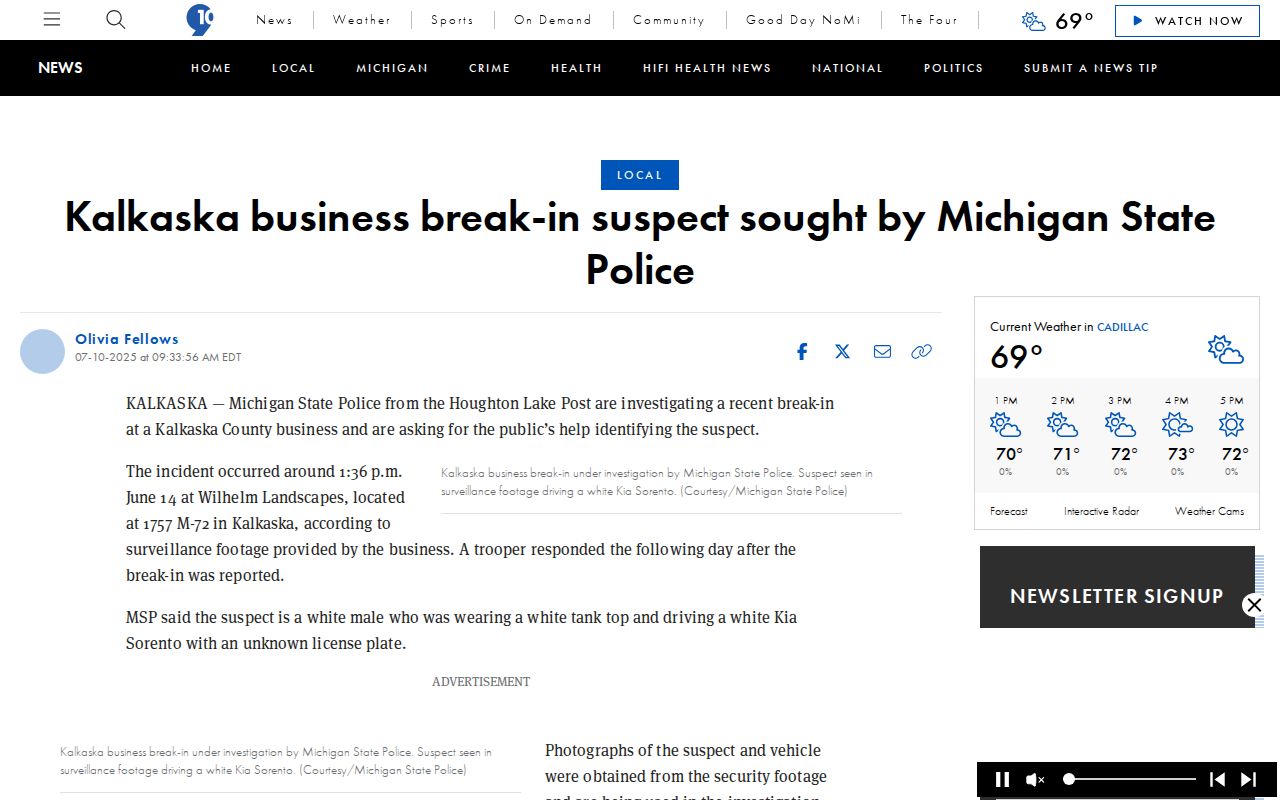
Even a later update reporting an arrest does not change what the original image showed or how the claim began.
Kalkaska Seasonal Enforcement Records
Kalkaska County's seasonal enforcement shows up in the sheriff's annual report. It covers marine patrol, off-road vehicles, and big local events. Think Trout Festival, the Fourth of July near Torch Lake, the county fair, Halloween, and the Iceman race. Those details describe agency operations. They are not categories in any public arrest log. An arrest made by a specialized patrol still has to be traced through the unit that made it.
Search by unit, event, location, and date. Then ask the agency that made the arrest for its incident or booking record. A news story can point the way. It cannot tell you who was actually booked.
Agency identity matters a lot here. The Sheriff's Office runs county corrections, so the jail may hold the booking record even when another department wrote the report. Kalkaska Village Police creates its own village incident records. State Police may own records from a state investigation. Ask each record holder for the piece it created. That also keeps an annual enforcement total from being mistaken for a list of named bookings.
For a fuller picture, check the local court file. The jail log stops at custody administration. The court file shows what happened later, whether amended charges, dismissal, plea, trial, or sentencing. A newspaper archive preserves only what was known on publication day. It never updates itself when a case ends.